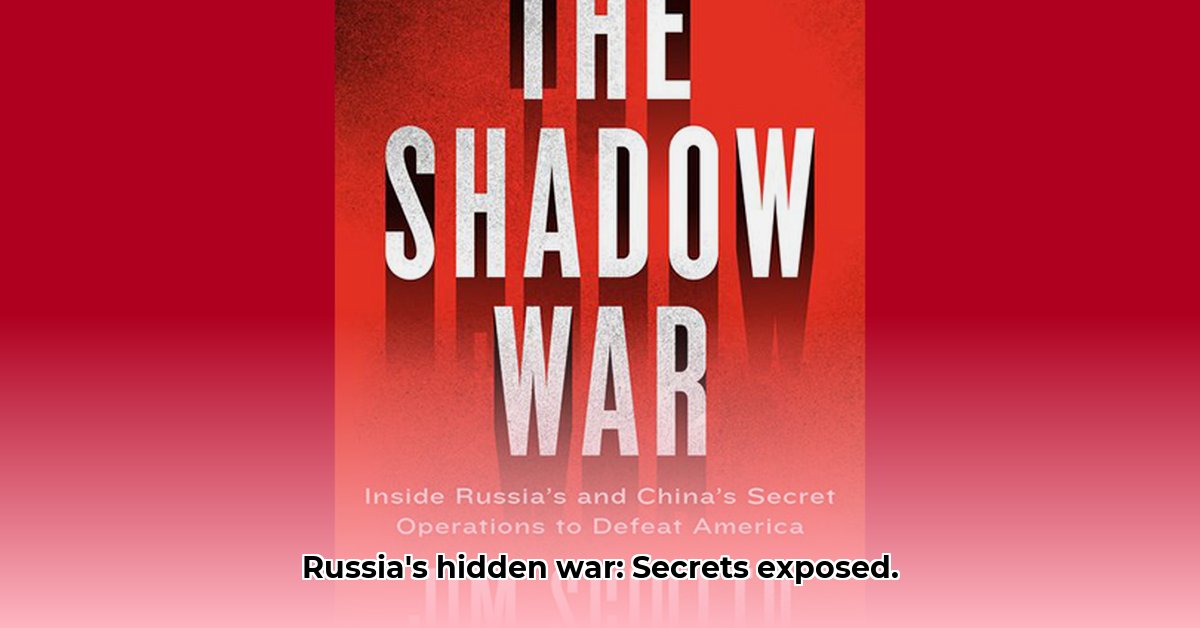
The Shadow War: Understanding Russia's Covert Campaign
The term "shadow war" describes a form of conflict waged not with conventional military might, but through information warfare, covert actions, and technological disruption. Russia, experts contend, is a leading practitioner of this strategy, employing subtle yet impactful tactics to achieve its geopolitical objectives. These actions, frequently operating below the threshold of traditional warfare, pose a significant challenge to international security.
Russia's Strategic Goals and Tactical Methods
Russia's aims in this shadow war extend beyond straightforward military victories. Instead, they prioritize weakening adversaries, undermining democratic institutions, and sowing chaos to erode Western influence. This long-term strategy relies on a patient, incremental approach.
The key objectives frequently cited by analysts include:
Weakening NATO: Through sophisticated cyberattacks and disinformation campaigns, Russia seeks to fracture the alliance, hindering cooperation and reducing its collective defense capabilities.
Fueling Internal Conflicts: Support for extremist groups and exploitation of existing societal divisions aim to destabilize target nations, increasing political polarization and hindering effective governance.
Undermining Democracy: Election interference, propaganda dissemination, and media discrediting are tactics employed to erode public trust in democratic systems and processes, potentially paving the way for more authoritarian regimes.
These objectives are pursued through a range of interconnected tactics:
| Objective | Tactics | Potential Impacts |
|---|---|---|
| Weaken NATO | Cyberattacks, disinformation campaigns, political influence operations | Reduced inter-allied trust, diminished collective response capabilities, strategic vulnerability |
| Fuel Internal Discord | Funding extremist groups, spreading divisive narratives online | Heightened political polarization, social unrest, governmental paralysis |
| Undermine Democratic Processes | Election interference (hacking, misinformation), propaganda | Decreased voter turnout, eroded public trust in elections, weakened democratic norms |
Dissecting the Methods: Cyber Warfare and Disinformation
Russia's shadow war arsenal is constantly evolving and includes a layered approach of cyber warfare and disinformation.
Cyber Warfare: Experts highlight Russia's advanced hacking capabilities, enabling disruption of critical infrastructure (power grids, election systems), data theft, and the spread of malware. These attacks aim to create instability and sow distrust. Do these sophisticated cyberattacks represent a significant threat to global stability?
Disinformation Campaigns: The deliberate spread of false narratives and propaganda through social media and other platforms aims to confuse the public, polarize opinions, and discredit reliable information sources. How effectively can democratic societies counteract these carefully crafted narratives?
Covert Operations: These hidden actions involve influencing political processes through various means, including funding campaigns, supporting favored candidates or groups, and directly manipulating elections. The aim is to shape political landscapes indirectly and subtly.
A Case Study: Allegations of Election Interference
Reports suggest Russian interference in numerous global elections, including the 2024 US elections. Although the extent of this interference remains under investigation, evidence suggests increased sophistication and scope. These actions aim to undermine confidence in electoral processes, sowing seeds of distrust and instability. What long-term effects will these interventions have on democratic governance?
Global Implications and Ongoing Research
The shadow war's repercussions extend far beyond regional conflicts, destabilizing global alliances and impacting worldwide security. Predicting the long-term consequences is complex, requiring continuous monitoring and analysis. Much of our understanding is based on investigations and intelligence reports; the full picture remains elusive and requires further research. The evolving nature of these actions demands ongoing scrutiny and adaptation.
Countering Russia's Hybrid Warfare: A Multi-Faceted Response
Understanding Russia's hybrid warfare tactics requires a nuanced approach. It's a coordinated strategy merging conventional military actions with information operations and economic coercion, continuously evolving. Countermeasures need to be equally sophisticated and adaptable.
Deconstructing the Kremlin's Strategy: A Step-by-Step Analysis
Effectively countering Russia's hybrid warfare demands a systematic approach:
Identify Objectives: What specific goals is Russia pursuing in a given context – territorial gains, regime change, or economic leverage?
Analyze Tactics: What specific methods are employed – information operations, economic pressure, cyberattacks, conventional military actions? How do these tactics interconnect?
Uncover Actors: Who are the players involved – not only the Russian state, but also proxies, mercenaries, or other state actors?
Assess the Narrative: Analyze the information environment. What messages are being disseminated, and what is their impact?
Develop Countermeasures: These should be multi-faceted, encompassing strengthened cybersecurity, effective counter-misinformation strategies, enhanced international cooperation, and increased resilience within target countries.
Adapting to a Dynamic Threat Landscape
The constant evolution of Russia's hybrid warfare necessitates a dynamic response. Continuous analysis, adaptation, and robust international collaboration are indispensable for long-term effectiveness.
Understanding War Institute Report: Russian Hybrid Warfare
⭐⭐⭐⭐☆ (4.8)
Download via Link 1
Download via Link 2
Last updated: Friday, May 23, 2025